Living with Rheumatoid Arthritis means you’re managing more than pain, you’re managing inflammation that starts deep inside the body, long before it reaches your joints. The good news? What you eat every day has a direct and measurable impact on how that inflammation behaves.
This isn’t about following a generic “anti-inflammatory diet” pulled from a wellness blog. RA has a specific origin, rooted in weakened digestion that allows toxic buildup (Ama) to accumulate and settle in the joints. The foods that help are those that restore digestive strength, clear those toxins, and nourish without overloading an already stressed system.
Here’s exactly what that looks like on your plate.
The Foundation: Warm, Freshly Cooked Meals Every Day
If there’s one non-negotiable in eating well for RA, it’s this: eat warm, freshly prepared food as often as possible.
Cold and refrigerated meals slow digestion. In a body already struggling to process and eliminate toxins, sluggish digestion is fuel on the fire. Warm food, cooked simply, keeps the digestive process moving and a well-functioning gut is one of the most powerful anti-inflammatory tools you have.
What to put on the plate:
- Soft-cooked vegetables — bottle gourd, pumpkin, carrots, and leafy greens are particularly gentle and easy to digest
- Light grains like millets or red rice over refined wheat or heavy starchy options
- Moong dal khichdi: the single most recommended meal for RA. It’s easy on the gut, warming, and genuinely nourishing without triggering further toxin buildup
Think of khichdi not as sick-food but as a therapeutic staple. Something that heals while it feeds.
The Healing Boosters: Your Kitchen Spices Are Doing More Than You Think
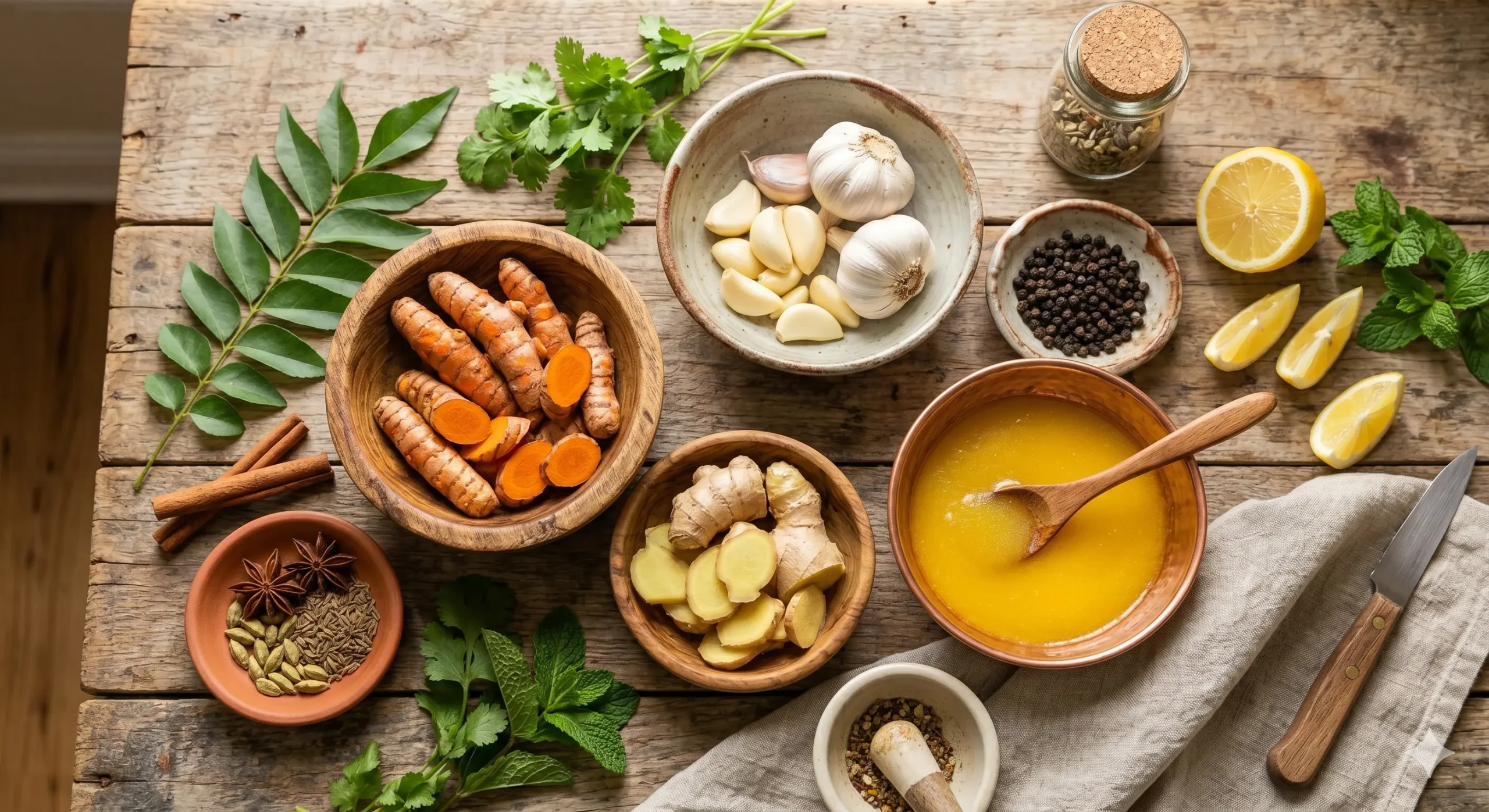
You don’t need a supplement cabinet if you’re using your spice rack properly. Three spices deserve daily use when you have RA:
- Turmeric is the most evidence-backed anti-inflammatory spice in Ayurveda. Its active compound, curcumin, works systemically to dampen the inflammatory signals that drive joint pain and swelling. A small amount added to warm milk, dal, or vegetables “every day” accumulates into real benefit over weeks.
- Ginger specifically targets stiffness. It improves circulation, supports digestion, and eases the joint tightness that tends to be worst in the mornings. Fresh ginger in warm water or cooked into meals is a simple daily habit worth building.
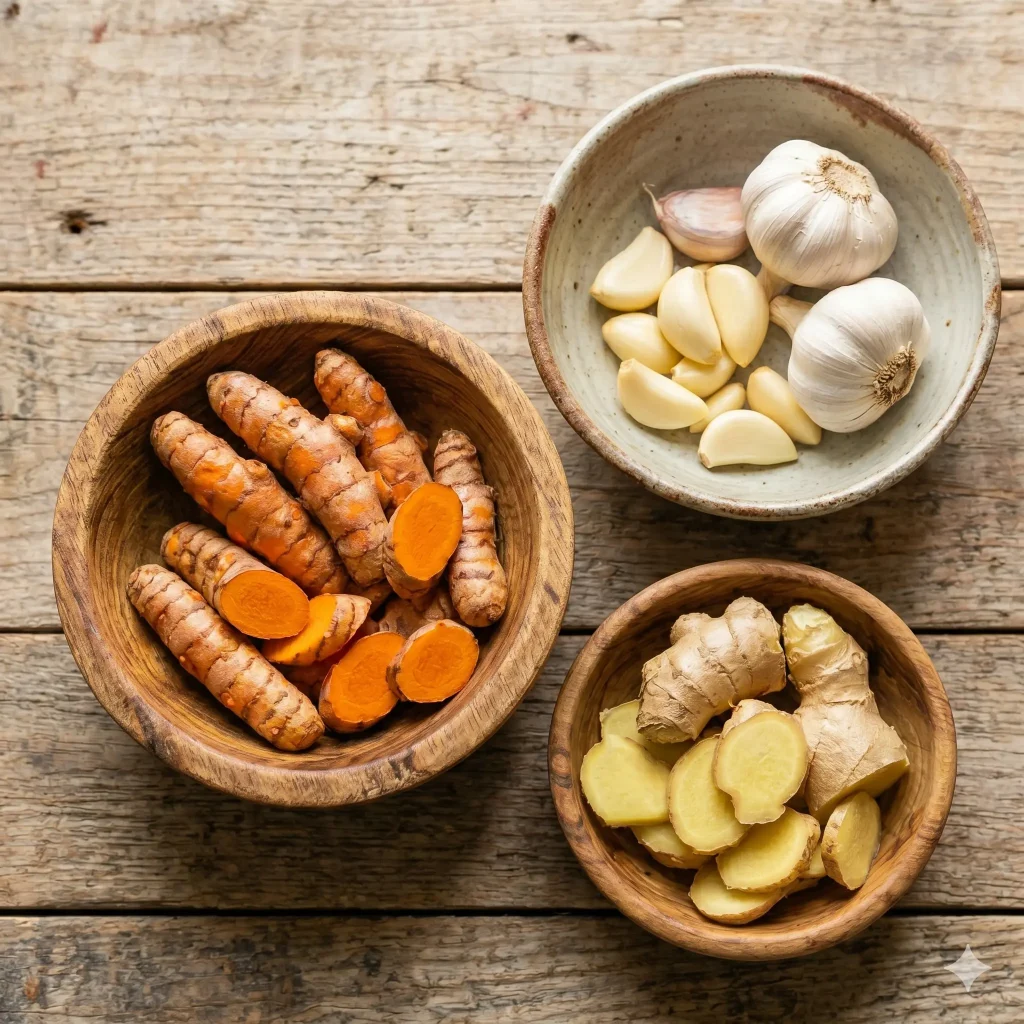
- Garlic works on the immune dysregulation at the core of RA. Used in cooking (not raw and in excess), it helps rebalance an immune system that has turned on the body’s own tissues.
None of these deliver dramatic overnight results but used consistently, they’re actively working against the disease process, not just improving the flavor.
Gut Repair: The Hidden Key to Reducing RA Flares
This is the part most dietary advice skips over, but it matters enormously: RA often worsens when digestion is compromised.
When the gut is weak, incompletely digested matter enters circulation, triggering immune responses that end up in your joints. Healing the gut isn’t a side project, it’s central to managing Rhematoid Arthritis.
What supports gut repair:
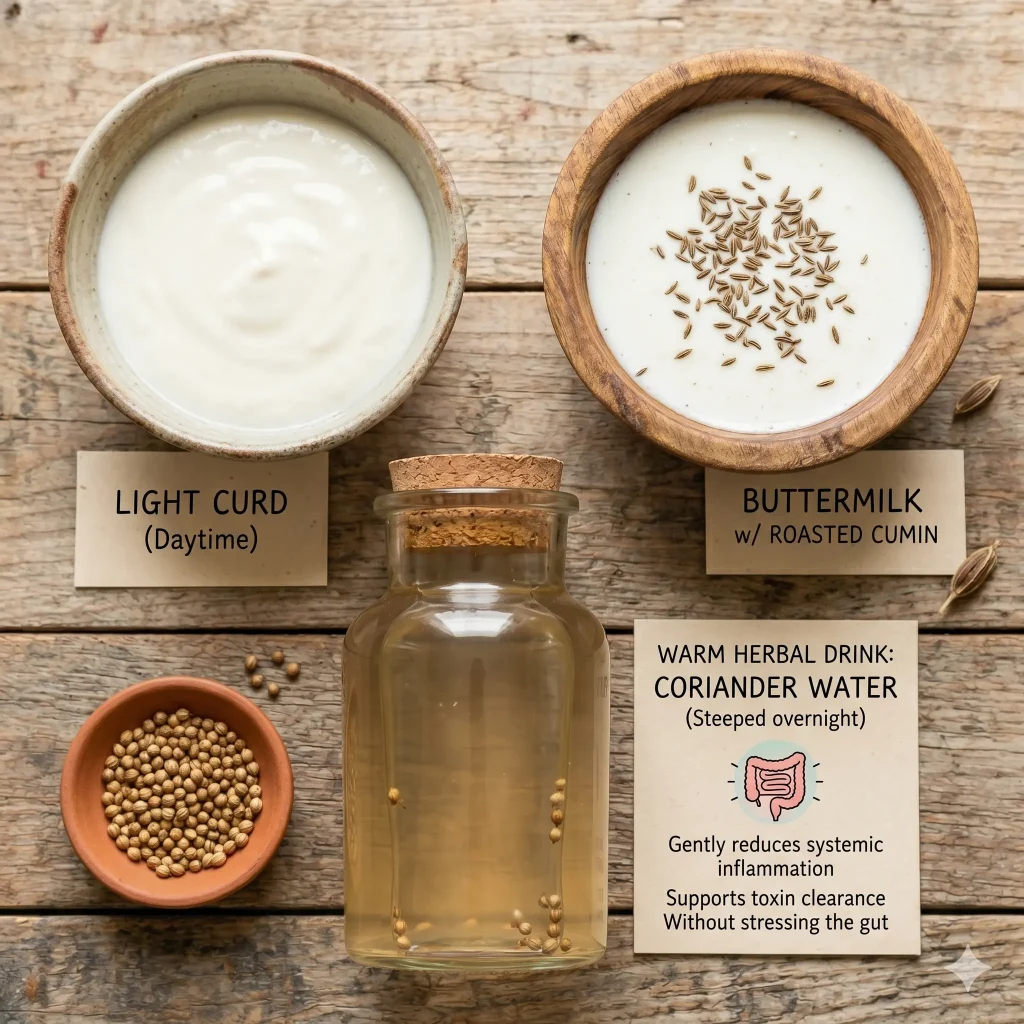
- Buttermilk with roasted cumin — taken mid-day, it strengthens digestive enzymes and reduces internal heat
- Light curd during the daytime (not at night, when it becomes harder to digest)
- Warm herbal drinks — particularly coriander water, made by steeping coriander seeds overnight and drinking in the morning. This gently reduces systemic inflammation and supports toxin clearance without stressing the gut
Think of these as daily maintenance rather than occasional remedies.
Joint Nourishment: Don’t Fear the Right Fats
Painful, stiff joints are partly the result of dryness i.e. insufficient lubrication of the tissue surrounding and within the joints. Eliminating all fats doesn’t help. The right fats actively reduce that friction and support recovery.
Include regularly:
- A small amount of ghee (clarified butter) — adds warmth, aids digestion, and lubricates joints from within
- Soaked nuts (walnuts and almonds, soaked overnight to make them easier to digest)
- Flaxseeds — a plant-based source of omega-3 fatty acids, directly linked to reduced inflammatory activity
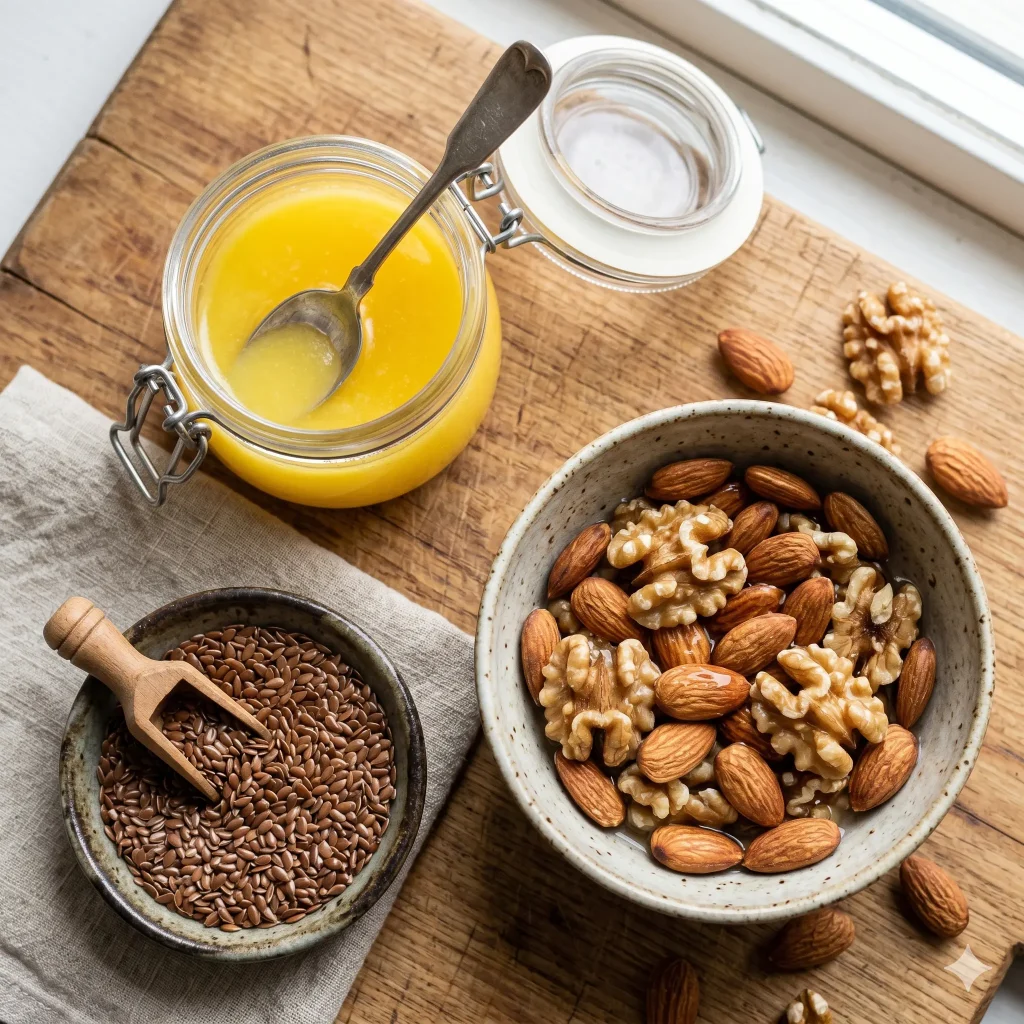
The key is quality and quantity, these are additions in small, consistent amounts, not a license to eat freely.
What Quietly Makes RA Worse: The Triggers Worth Knowing
Some foods don’t announce themselves as problematic. They don’t cause an immediate flare, they just build inflammation slowly, in the background, until your joints announce the problem loudly.
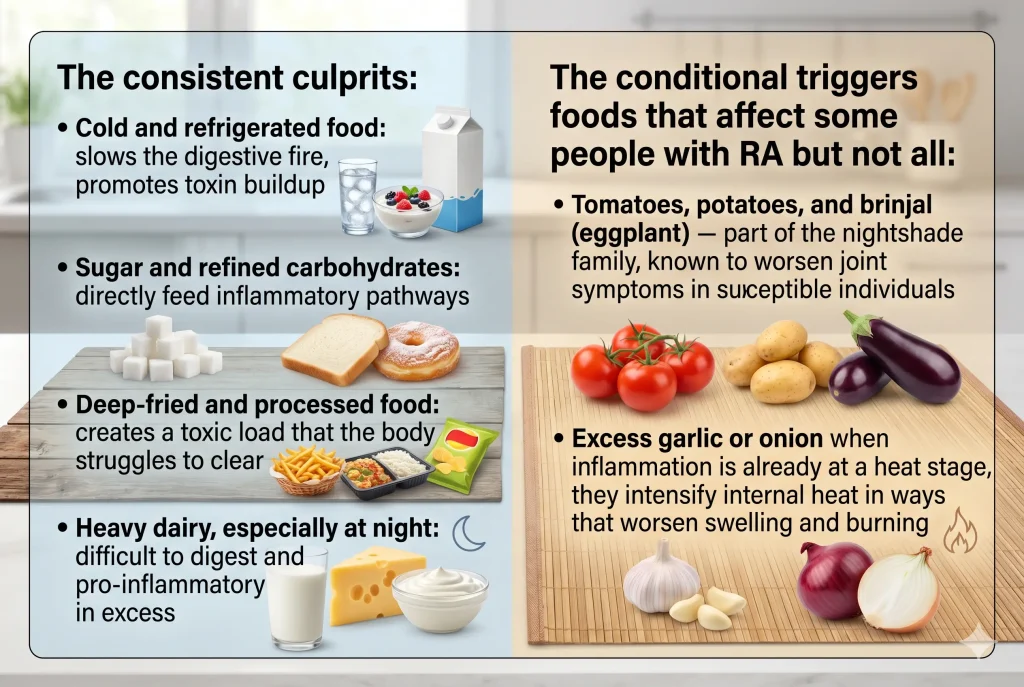
The consistent culprits:
- Cold and refrigerated food: slows the digestive fire, promotes toxin buildup
- Sugar and refined carbohydrates: directly feed inflammatory pathways
- Deep-fried and processed food: creates a toxic load that the body struggles to clear
- Heavy dairy, especially at night: difficult to digest and pro-inflammatory in excess
The conditional triggers foods that affect some people with RA but not all:
- Tomatoes, potatoes, and brinjal (eggplant) — part of the nightshade family, known to worsen joint symptoms in susceptible individuals
- Excess garlic or onion when inflammation is already at a heat stage, they intensify internal heat in ways that worsen swelling and burning
If you notice a pattern between eating something specific and a flare a day or two later, trust that observation. RA is personal, and individual triggers matter.
This Is a Reset, Not a Restriction
The instinct when managing a chronic condition is to think in terms of what you’re giving up. But eating well for RA is less about restriction and more about a fundamental shift in how you eat i.e. the temperature, the freshness, the simplicity.
When food is warm, digestible, and intentional:
- The gut heals, because it’s no longer overwhelmed
- Toxic buildup reduces, because digestion completes properly
- Inflammation loses its constant fuel source
The joints don’t recover overnight. But over weeks and months of consistent, gut-first eating, many people with RA notice real changes like less morning stiffness, longer windows between flares, and a gradual reduction in the systemic fatigue that RA brings with it.
Food doesn’t replace treatment. But it absolutely changes the terrain on which that treatment works.
This article is for informational purposes and reflects Ayurveda dietary principles for managing RA. Please consult a physician or Ayurvedic practitioner before making significant changes to your diet or treatment plan.
Begin with a consultation
If your RA symptoms are recurring or unpredictable, it may be time to look beyond the joints.