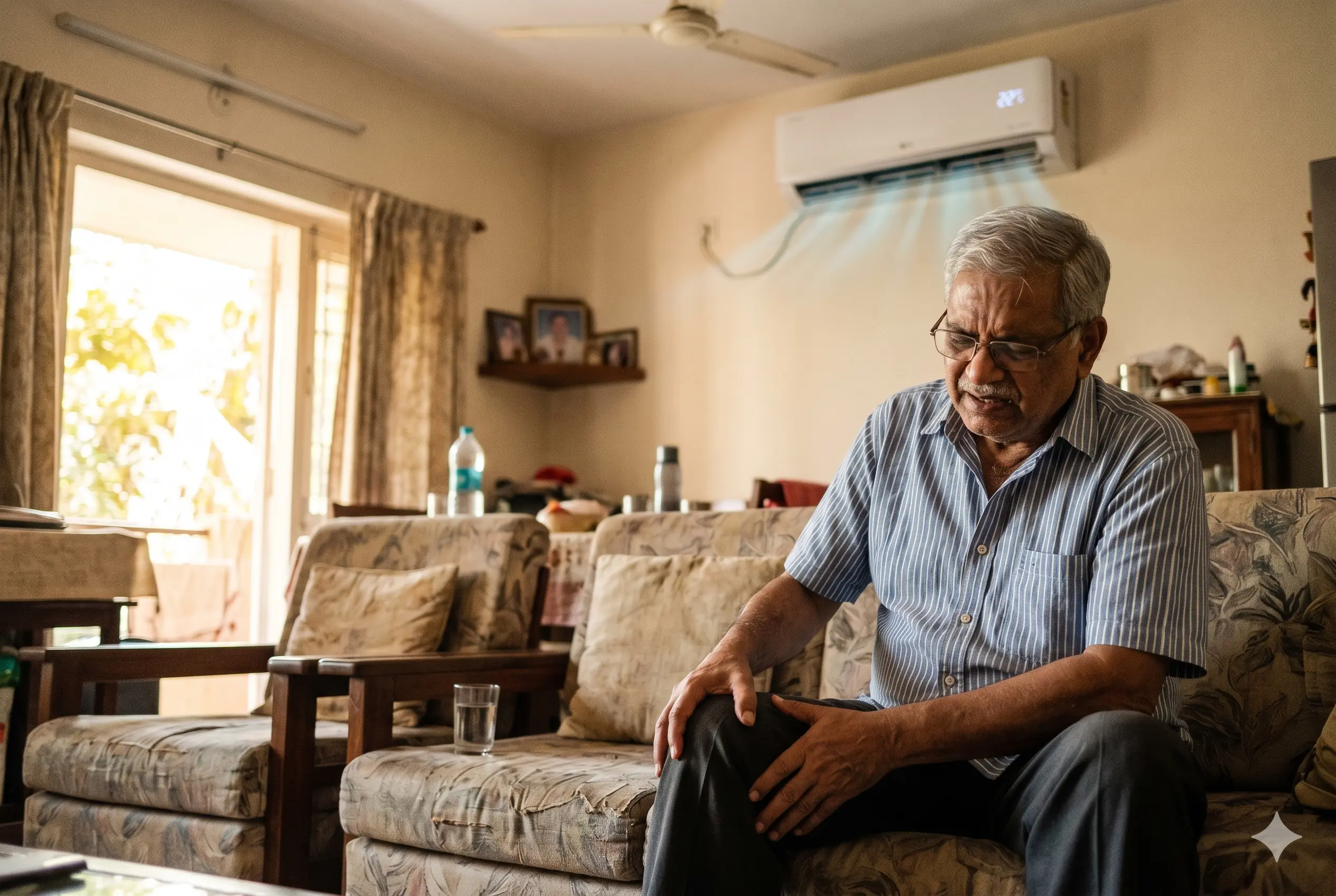
Most people with rheumatoid arthritis are familiar with swelling. But there’s a particular kind of flare that feels different. Joints that aren’t just painful and puffy, but warm to the touch, visibly red, and accompanied by a deep burning sensation. This isn’t just inflammation doing its usual work. It’s inflammation running hotter than normal, and it calls for a different approach.
In Ayurvedic terms, this is a stage where Pitta (the force governing heat and metabolism) has entered the picture. While RA is primarily a Vata-Ama condition (driven by digestive toxins and disturbed movement), Pitta vriddhi [Pitta aggravation] shifts both the symptoms and what the body needs to recover. Treating it like an ordinary RA flare can actually make things worse.
Here’s what’s happening, and what to do about it.
Why “Just Cool Everything Down” Is the Wrong Instinct
The logical response to heat is cold. Cold foods, cold compresses, anything to douse the fire. But in RA with heat-led swelling, this is exactly the wrong move and understanding why matters.
The root problem in RA is still weak digestion. When you suppress digestive strength (Agni), and more specifically Jatharagni [the core digestive fire] with cold foods and cold drinks, digestion becomes incomplete, toxic residue (Ama) accumulates, and the underlying RA process worsens. You may temporarily reduce the sensation of internal heat (Ushnata) while feeding the very mechanism that drives the swelling (Shotha).
The goal isn’t simply cold, it’s cooling without extinguishing. Reducing internal heat while keeping digestion functioning well enough to continue clearing toxins. These are different things, and the foods that achieve both are specific.
What to Eat When Inflammation Runs Hot
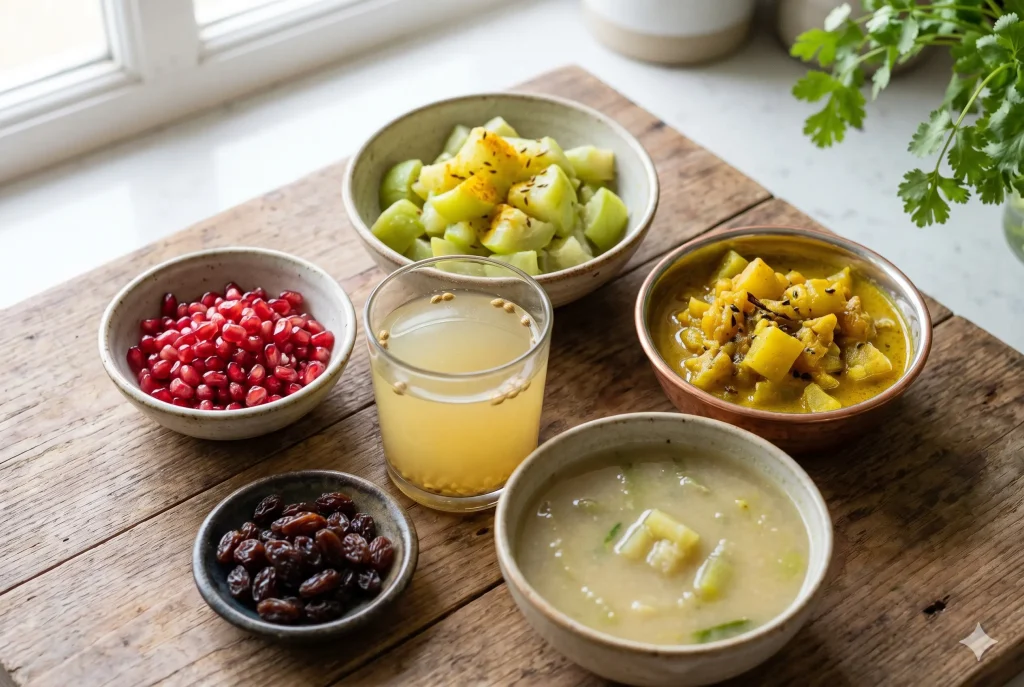
These foods share a quality Ayurveda describes as Sheeta veerya — a cooling potency that works from within, without shutting down the digestive process.
- Bottle gourd (lauki) is one of the most valuable foods in this state. It’s light, easy to digest, and genuinely cooling without being heavy on the gut. Cooked simply (steamed or in a thin dal) it reduces Ushnata [internal heat] while supporting the continued elimination of Ama.
- Ash gourd (kushmanda) works similarly. Mild, cooling, and easily processed by an already-stressed digestive system. A light sabzi or soup form suits this stage well.
- Pomegranate offers something additional, it supports blood tissue (Rakta dhatu) while calming Pitta. Fresh pomegranate or a small glass of the juice works well as a daily addition during active hot swelling phases.
- Soaked raisins (draksha) are a simple, underrated cooling food. A small handful soaked overnight and eaten in the morning reduces heat without disrupting digestion.
- Coriander water i.e. coriander seeds soaked overnight in water, strained and drunk in the morning is one of the quietest but most consistent tools for reducing systemic heat and inflammation over time. It works slowly, but it works.
What to Avoid During a Hot Flare
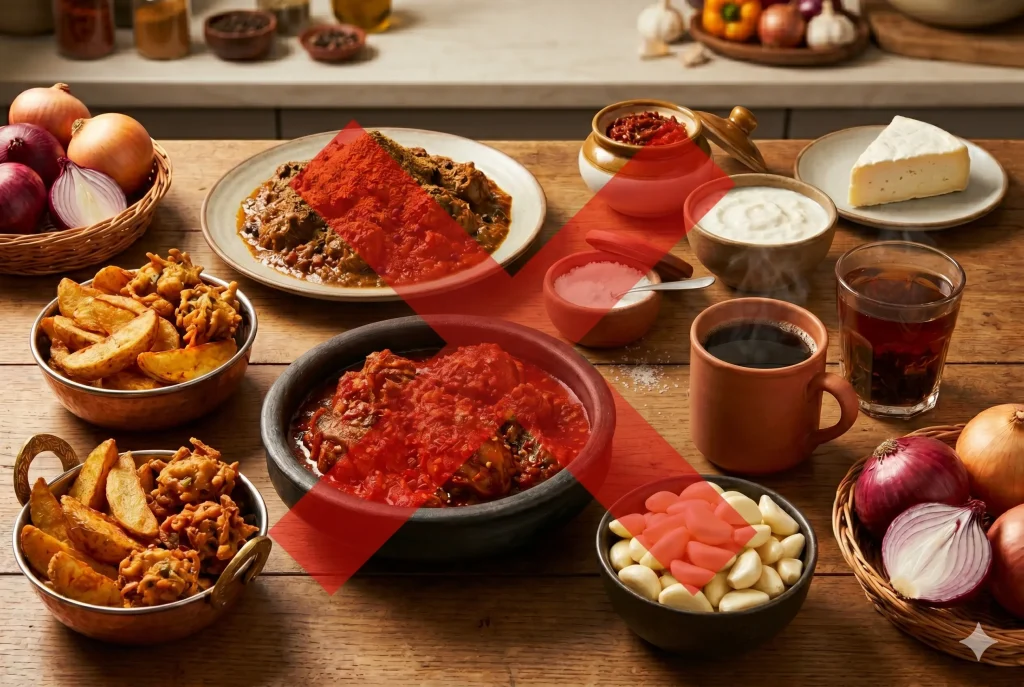
Certain foods directly intensify Pitta, and during a phase of heat-led swelling, even small amounts can worsen joint redness, Daha [burning], and Shotha [swelling].
Foods to reduce or avoid:
- Spicy, fried, and heavily seasoned food (ati ushna ahara [excessively hot diet]) — these raise Ushnata [internal heat] directly
- Sour and fermented foods — particularly in excess, these trigger Pitta prakopa [Pitta aggravation] through their sour taste.
- Excess salt — intensifies the heat response
- Tea and coffee — stimulants that push Pitta higher when it’s already elevated
- Garlic and onion in large amounts — ordinarily beneficial in RA, but during heat-dominant flares, they can intensify burning (Daha) symptoms. Use sparingly or pause briefly during acute phases
The underlying principle: anything that adds heat to a system that is already running too hot will worsen the very symptoms you’re trying to manage.
External Care: Cooling the Joints From Outside
Internal diet changes address the cause. External therapies address the immediate discomfort of hot, burning joints and in this stage, the approach changes significantly from the usual RA treatments.
Standard Vata-focused RA care often uses warming oils and heated applications. When Pitta is dominant, that’s contraindicated. Hot applications on already burning joints increase Daha [burning sensation] and can intensify Shotha [swelling].
Instead, Sheeta upachara [cooling therapies] are appropriate here:
- Coconut oil — naturally cooling, absorbs well, and calms burning when applied gently to affected joints
- Pinda Taila — an Ayurveda preparation specifically known for its Pitta shamaka [Pitta-pacifying] and Daha-hara [burning-reducing] properties; particularly effective for warm, inflamed joints
Gentle application not vigorous massage, which generates heat, gives the joint surface some relief while the internal work of diet and digestion does the deeper healing.
The Bigger Picture: RA Doesn’t Stay in One State
One of the most important things to understand about RA is that it shifts. The state of the doshas (Dosha avastha) at any given time shapes the symptom picture and effective management has to shift with it.
Most of the time, RA management focuses on Vata and Ama: warming the digestion, clearing toxins, pacifying the erratic movement that deposits inflammatory residue in the joints. But when burning [Daha], redness, and heat enter the picture, that same diet and treatment approach needs adjustment. Continuing to use heating foods and warming herbs in a Pitta-dominant phase can amplify symptoms rather than calm them.
Noticing that your flare feels different i.e. hotter, redder, more burning than the usual aching stiffness is clinically useful information. It tells you that the current state calls for a different response. Diet adjusted. Therapy adjusted.
The goal unchanged: reduce Ama, protect digestion, correct the pathogenesis at its root.
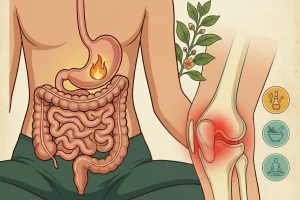
The joints are the visible part. The work happens in the gut.
This article is for informational purposes and reflects Ayurvedic principles for managing RA. Please consult your physician or Ayurvedic practitioner before adjusting your treatment plan.
Begin with a consultation
If your RA symptoms are recurring or unpredictable, it may be time to look beyond the joints.