Psoriasis and eczema are among the most commonly confused skin conditions. Both can cause redness, itching, irritation, and recurring flare-ups. Both can worsen during stressful periods. From the outside, they may even look similar.
However, they are very different conditions. Modern medicine classifies them differently based on how the immune system is involved (one is autoimmune, the other is a hypersensitivity response). Ayurveda also distinguishes between them, but it does so by looking at the underlying imbalance in the body that is being expressed through the skin.
Understanding this difference is important because treating psoriasis like eczema or eczema like psoriasis, may prevent you from achieving lasting improvement.
This article explains how Ayurveda differentiates these conditions and how treatment is tailored to address the root cause rather than just the visible symptoms.
Why the Confusion Happens
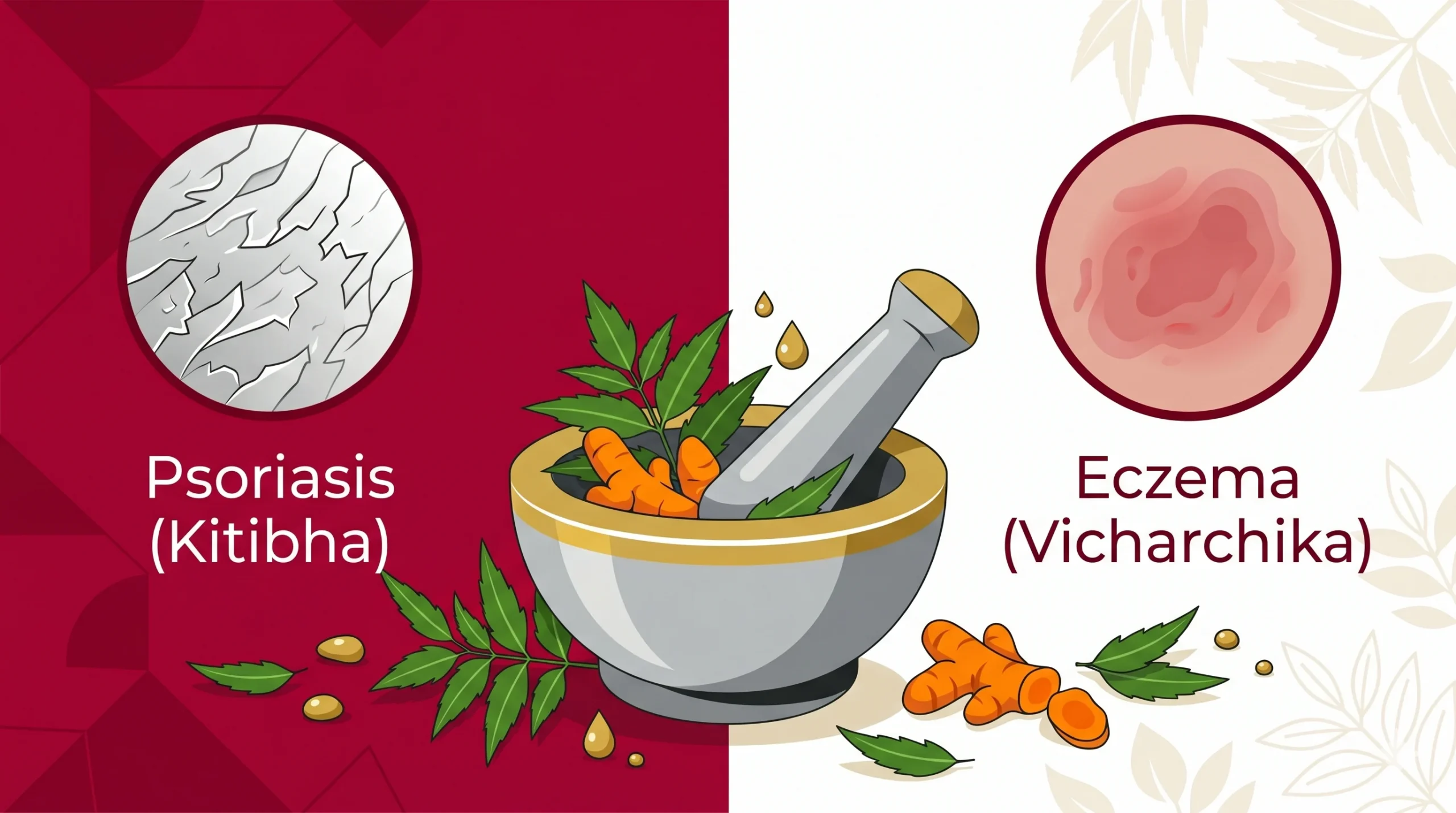
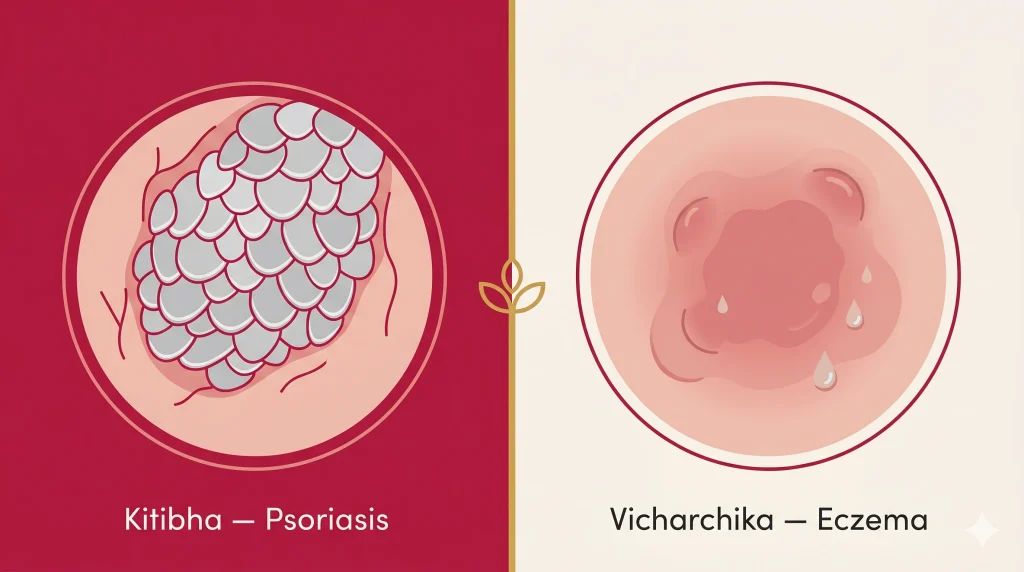
Psoriasis typically appears as thick, dry, well-defined patches covered with silvery scales. It commonly affects the scalp, elbows, knees, and lower back.
Eczema often causes red, inflamed, itchy patches that may become moist, cracked, or ooze fluid. It is frequently found in skin folds such as behind the knees, inside the elbows, and around the neck.
The challenge is that these patterns do not always stay distinct. Long-standing eczema that has been scratched can become thickened and start to resemble psoriasis. Psoriasis occurring in skin folds or on the face can sometimes look very similar to eczema.
This is where Ayurveda offers a different perspective. Instead of focusing only on how the skin looks, it asks what the skin is trying to reveal about the body’s internal state.
How Ayurveda Understands Psoriasis and Eczema
In Ayurveda, chronic skin conditions are broadly classified under Kushta Roga (skin disorders). While psoriasis and eczema may share certain symptoms, they are understood as different patterns of imbalance.
Psoriasis is most closely associated with Kitibha Kushta. It is characterised by dry, rough, hard-to-touch skin that may appear darkened or blackish-brown, often with noticeable scaling. Classical Ayurveda texts, including the Charaka Samhita, describe Psoriasis as predominantly a Vata-Pitta condition. However, in clinical practice, its thickened, scaly appearance often reflects strong Vata and Kapha involvement as well. The condition is usually dry rather than oozing and tends to become more persistent over time.
Eczema is most closely associated with Vicharchika Kushta. It commonly presents with redness, intense itching, irritation, inflammation, and sometimes oozing. Ayurveda relates this pattern primarily to Kapha and Pitta imbalances, which contribute to wet skin, oozing and inflammation.
These classifications are important because they help determine which dosha is disturbed, which tissues are most affected, and which treatment approach is likely to be most effective.
The Root Cause: Where Both Conditions Begin
Although psoriasis and eczema appear differently, Ayurveda believes they often share a common starting point.
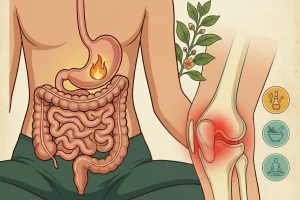
According to Ayurveda, healthy digestion and metabolism are essential for healthy skin. This digestive and metabolic function is called Agni (digestive fire). When Agni becomes weak—a condition known as Mandagni—the body may not process food properly.
Over time, this can lead to the accumulation of Ama (metabolic waste or toxins). Ayurveda describes Ama as heavy, sticky, and disruptive residue that can interfere with normal bodily functions.
As Ama builds up and circulates through the body, it may start affecting the skin. This is why Ayurveda views many chronic skin conditions as more than skin-deep. The skin is where the problem becomes visible, but the underlying disturbance may begin elsewhere in the body.
What differs between psoriasis and eczema is how the doshas are affected and how the body responds to this underlying imbalance.
How Ayurveda Distinguishes Them in Practice
An Ayurveda physician considers several factors together rather than relying only on the appearance of the skin.
Appearance of the Skin:
- Psoriasis: Dry, thick, scaly plaques with clearly defined borders.
- Eczema: Red, moist, itchy patches that may ooze.
Seasonal Pattern:
- Psoriasis often worsens during winter or cold, dry weather.
- Eczema often flares during summer and monsoon when it is hot and humid.
Body Constitution (Prakriti):
- Vata-Kapha dominant individuals may be more prone to psoriasis-like presentations.
- Pitta-Kapha dominant individuals may be more prone to eczema-like presentations.
Digestive History:
- Irregular eating habits, excessive fasting, and cold & dry foods may contribute to psoriasis-like patterns.
- Excess heat-producing foods like spicy, sour, fermented foods may contribute to eczema-like patterns.
Itching Pattern:
- Psoriasis often causes a persistent dry itch causing scales
- Eczema tends to cause intense itching, burning sensations and scratching it causes it to ooze.
This broader assessment allows treatment to be personalised rather than based on symptoms alone.
Treatment for Psoriasis in Ayurveda
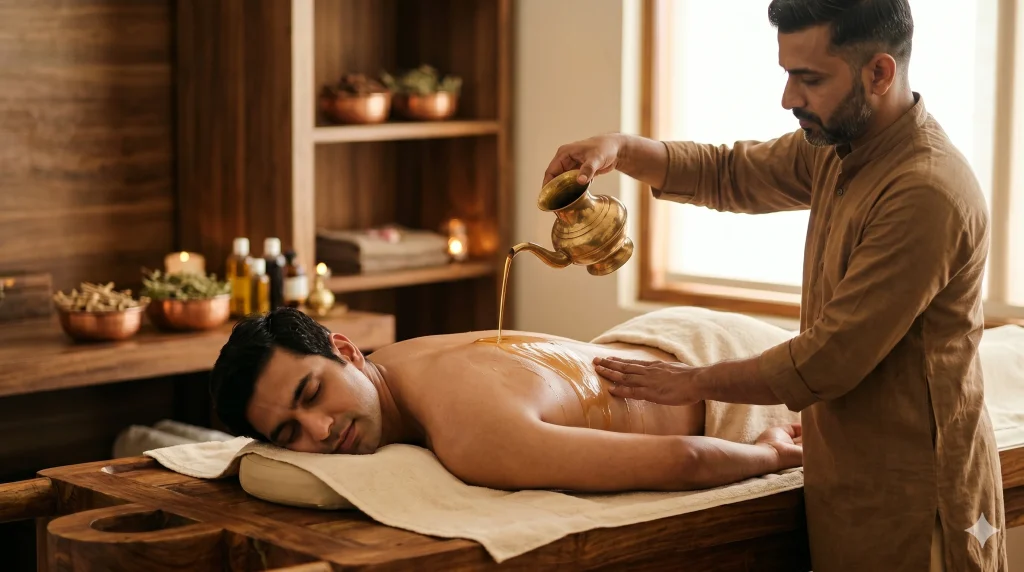
In psoriasis, Ayurveda focuses on reducing dryness, supporting healthy digestion, removing accumulated toxins, and restoring balance.
Ayurveda Treatment for Eczema
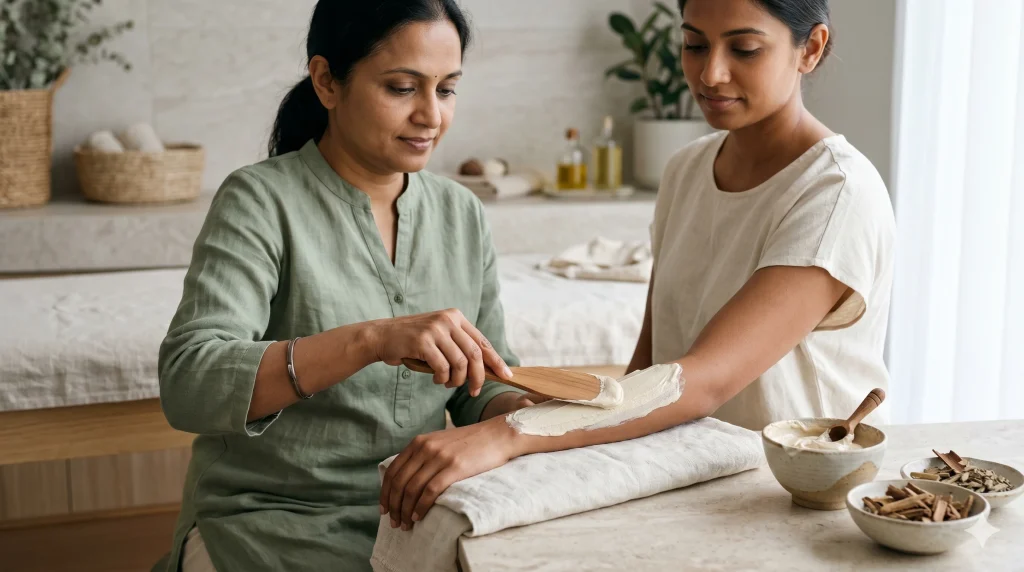
The Pitta-dominant nature of eczema means the body is hot, reactive, and inflamed. The priority is cooling, calming, and drying the excess moisture
Treatment Principles Shared by Both Conditions
Although the treatment approach differs, both psoriasis and eczema often benefit from:
- Improving digestion and metabolism (Agni)
- Reducing Ama (metabolic toxins)
- Supporting healthy blood and skin tissues
- Managing stress and emotional triggers
- Avoiding incompatible food combinations (Viruddha Ahara) like fish with milk being the most classical example.
- Following seasonal routines (Ritucharya) not just reactive treatment during flare-ups.
Herbs such as Manjishtha (Indian madder), Neem, and Guduchi are commonly used to support healthy skin and blood according to Ayurveda principles.
What This Means for You
If you have been treating psoriasis and eczema as though they are the same condition, you may find that symptoms keep returning despite temporary relief. Topical steroids and antihistamines can suppress the visible symptoms, but they don’t address the Agni disruption, the Ama accumulation, or the doshic imbalance that keeps regenerating the condition.
Ayurveda aims to understand why the condition developed in the first place. Rather than focusing only on visible symptoms, it evaluates digestion, lifestyle, body constitution, disease history, and symptom/flare-up patterns.
The goal is not simply to suppress symptoms but to address the underlying factors that may be contributing to recurring flare-ups.
Begin with a consultation at Ayurvedamritham
If you have been experiencing recurring flare-ups, incomplete relief, or uncertainty about your diagnosis, our experienced physicians assessment may help provide greater clarity and a more personalised path forward.
Frequently Asked Questions
This content is for educational purposes only. Please continue any prescribed medications and consult your physician before making changes to your care plan. Ayurveda treatment should be undertaken under the guidance of a qualified practitioner.