If you’re living with Rheumatoid Arthritis, you already know this isn’t just joint pain.
It’s the stiffness when you wake up. The fatigue that lingers even after rest. The unpredictability. Some days feel manageable, others don’t. And beneath it all, there’s often a quiet sense that something deeper in your body is off. That what you’re experiencing is more than just inflammation in the joints.
Ayurveda recognised this pattern long ago. It is called Amavata.
The disease doesn’t begin in the joints
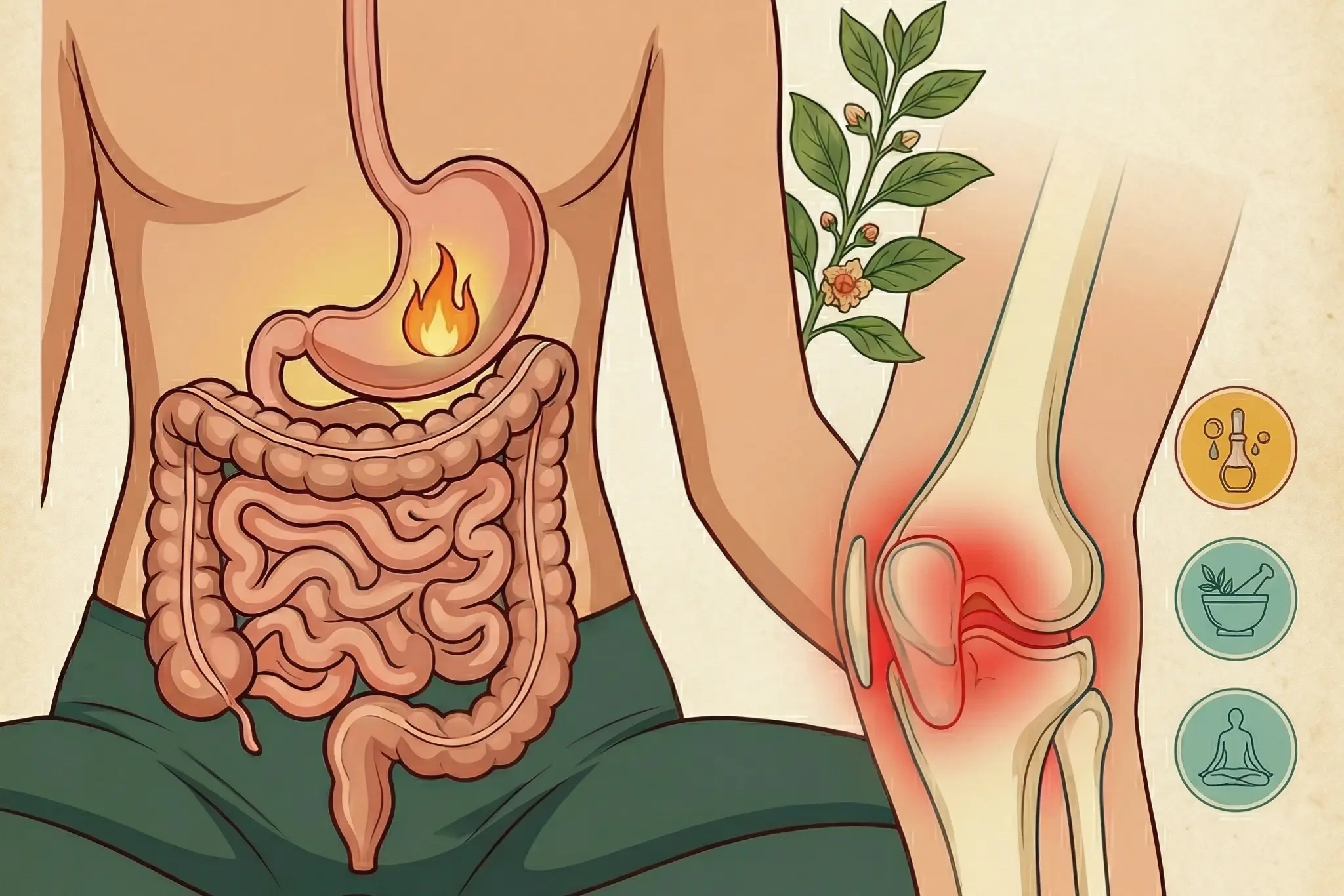
What you feel in your joints is not where the problem begins. It is where it shows up. In Ayurveda, Rheumatoid Arthritis is seen as a system-wide imbalance that starts with impaired digestion and disturbed metabolism, long before inflammation appears. Three processes drive it:
- Mandagni (Low Digestive Fire) — When digestion weakens, the body struggles to properly break down food and absorb nutrients. Over time, this leads to internal imbalance.
- Ama (Toxic Residue) — This forms when digestion is incomplete. It is heavy, sticky, and disruptive. As it circulates, it interferes with normal function of the body.
- Vata aggravation (Disturbed Movement) — Vata carries this accumulated Ama or toxic waste through the body and deposits it in vulnerable areas such as the joints. This is what triggers pain, swelling, and stiffness recognised as Rheumatoid Arthritis.
In modern terms, this points to a failure in immune regulation, where the body struggles to correctly identify what to target, how strongly to respond, and when to switch the inflammation off which typically manifests in the joints.
Why do my symptoms keep returning?
You may have noticed this already that after treatment the relief comes, but after sometime the symptoms return suddenly or gradually.
This happens because most approaches focus on managing just the inflammation. If the root causes such as weak digestion and toxic residue buildup remain unchanged, the cycle continues.
This is why the classical Ayurveda approach focuses not on suppressing the inflammatory response, but on correcting the underlying conditions that produce it. Giving you a more permanent relief.
The step by step healing pathway
Rather than a single intervention, Ayurveda follows a structured and layered approach to treatment:
Stage 1: Deepana & Pachana — Reset the system
The first step is to strengthen digestion. This phase focuses on:
- Rekindling Agni (digestive and metabolic fire)
- Breaking down existing Ama (toxic waste)
Without this foundation, deeper therapies and treatment have a limited effect.
Stage 2: Langhana — Lighten the load on the body
The body is gently supported to reduce excess burden on the metabolic system by:
- A therapeutic diet tailored to your condition
- And In some cases, supervised fasting
The goal is to create space for the system to reset and and prepare the tissues for purification.
Stage 3: Panchakarma — Address the root (when needed)
Once the body is prepared, deeper cleansing may be introduced in some cases.
- Virechana helps clear accumulated toxins
- Basti, a key therapy for Vata disorders, re‑establishes proper circulation and regulation through the body’s channels.
Stage 4: Rasayana — Rebuild and restore
Once the system is clearer, strengthening of tissue and nourishment begins. Specific Rasayana formulations help:
- Support immune balance
- Improve resilience
- Nourish tissues
Stage 5: Ahara & Vihara — Sustain the results
Healing is maintained through a personalised lifestyle guidance. This includes:
- Diet aligned with your constitution
- Daily routines that help prevent recurrence
This is what supports long-term stability and anchor the changes made in earlier stages.
What makes this approach different?
Most treatments for RA begins after inflammation starts. But Ayurveda works earlier, it focuses on the digestive and metabolic conditions that allow Ama (toxic waste) to form and accumulate in the first place.
Treatment is personalised, not protocol‑based. Your Digestion status, Dosha predominance, disease stage, and constitution all shape the treatment plan.
Crucially, Ayurveda can also be integrated alongside your current medical care, with appropriate medical supervision.
Begin with a consultation
The first step is understanding your body clearly. A consultation helps identify:
Frequently Asked Questions:
Disclaimer
This content is for educational purposes only. Please continue any prescribed medications and consult your physician before making changes to your care plan. Ayurveda treatment should be undertaken under the guidance of a qualified practitioner.