
Respiratory Disorders / Tamaka Shwas
Ayurveda Treatment for Asthma
Asthma treatment in Ayurveda is done between attacks, not during them. Clearing the underlying Kapha when the chest is quiet is what reduces how often the next episode comes.
40+ years
Led by Prof. Dr. G. G. Gangadharan
Yelahanka
North Bengaluru, Judicial Layout
Keep your inhaler
Treatment runs alongside it
What is Asthma?

Asthma is a chronic inflammation of the airways. The lining stays sensitised, and on exposure to a trigger the muscle around the airway tightens while the lining swells and produces mucus. Air gets in more easily than it gets out, which is why the wheeze is loudest on breathing out.
Between attacks the airways look almost normal — which is the trap. Most patients treat asthma only when it flares, and the underlying inflammation continues quietly, leaving the airways ready to react again.
Ayurveda’s approach inverts this. The serious work is done in the quiet period, and this is the single most important thing to understand about the treatment.
Treatment for asthma in Ayurveda begins with Tamaka Shwasa
The texts describe five kinds of Shwasa [disordered breathing]. Four are acute and grave. The fifth, Tamaka Shwasa, is chronic and recurrent — and the description matches bronchial asthma closely enough to be unmistakable.
The mechanism
Samprapti
Kapha accumulates in the chest and obstructs pranavaha srotas [the channels of breathing]. Vata, blocked from its normal downward course, reverses upward as pratiloma gati — and that reversal is the breathlessness.
The classical signs
Tamaka lakshana
Wheezing breath, cough with difficult expectoration, relief on sitting upright, worsening in cold and damp, and aggravation at night. The texts note that the patient longs for warmth — a detail any asthmatic recognises.
The single most useful clinical instruction in the classical literature is about timing. Purification is performed in vishrama kala [the period of remission], never during an attack. During an episode the treatment is shamana — settling, warming, relieving. The clearing comes later, when the chest is quiet.
Read this before anything else. Do not stop your inhalers because you have started Ayurveda treatment. Keep your reliever inhaler with you at all times, including during therapy sessions. If an attack is severe — you cannot complete a sentence, the reliever is not working, or your lips or fingertips look blue — that is a medical emergency and needs a hospital, not a clinic appointment. Ayurveda treatment here is preventive work between attacks; it does not replace emergency care.
What triggers and sustains it
The classical causes are Kapha-generating and channel-obstructing. The local triggers are Bengaluru’s own.
Our Ayurveda Treatment Protocol
Scheduling matters here more than in most conditions. The intensive phase is planned for a stable stretch — not during a flare, and ideally not at the peak of your worst season.
Assessment
Day 1
Attack frequency and severity, night symptoms, known triggers, seasonal pattern, current inhalers and steroids, any spirometry, and childhood or family history of allergy and eczema.
Deepana & Pachana
Days 1 – 7
Digestive correction with warming, pungent herbs. Ayurveda treats poor digestion as a direct contributor to Kapha in the chest, so this stage precedes any respiratory work.
Snehana & Swedana
Days 5 – 14
Internal medicated ghee and external oleation, followed by chest-focused herbal steam. This loosens the accumulated Kapha and prepares the body for clearing — attempting purification without it is both harsher and less effective.
Vamana
Days 14 – 18
Vamana [therapeutic emesis] is the classical treatment of choice for Kapha in the chest, and the central intervention in asthma. Performed only in remission, only after proper preparation, and only where the patient is fit for it.
Samsarjana Krama
Days 18 – 25
Graded rebuilding of diet from thin gruel back to normal food. The respiratory system is particularly sensitive during this window, so pace and food temperature both matter.
Rasayana & Seasonal Care
Months 2 – 6
Long-phase strengthening — Chyawanprash and similar preparations — with the diet and daily routine adjusted ahead of your known difficult season rather than in reaction to it.
Medicines, Therapies and Daily care
Internal formulations
Different medicines are used during a flare and during the quiet phase:
- Vasa [Adhatoda vasica] and Kantakari, long-standing respiratory herbs
- Sitopaladi Churna and Talisadi Churna for cough and congestion
- Dashamoolakatutrayadi Kashayam and Kanakasava
- Agastya Rasayana and Chyawanprash through the maintenance phase
Therapies
Chosen for the chest and the upper airway together:
- Vamana, the principal purification in asthma
- Urovasti [warm medicated oil retained over the chest]
- Nasya [medicated nasal instillation] where allergic rhinitis or sinus congestion accompanies the asthma
- Swedana and steam inhalation with appropriate herbs
Breathing and environment
Daily Pranayama [regulated breathing practice], introduced gently and never during a flare. Alongside it, the practical work — dust control, bedding hygiene, humidity in the monsoon, and knowing which month your season starts.
Diet
Warm, light, freshly cooked food. Out: curd, cold drinks, refrigerated and leftover food, excess sweets, banana and heavy dairy at night. In: ginger, black pepper, turmeric, honey used as the texts direct — never added to anything hot.
Why Choose Ayurvedamritham
Integrative by design, not by compromise
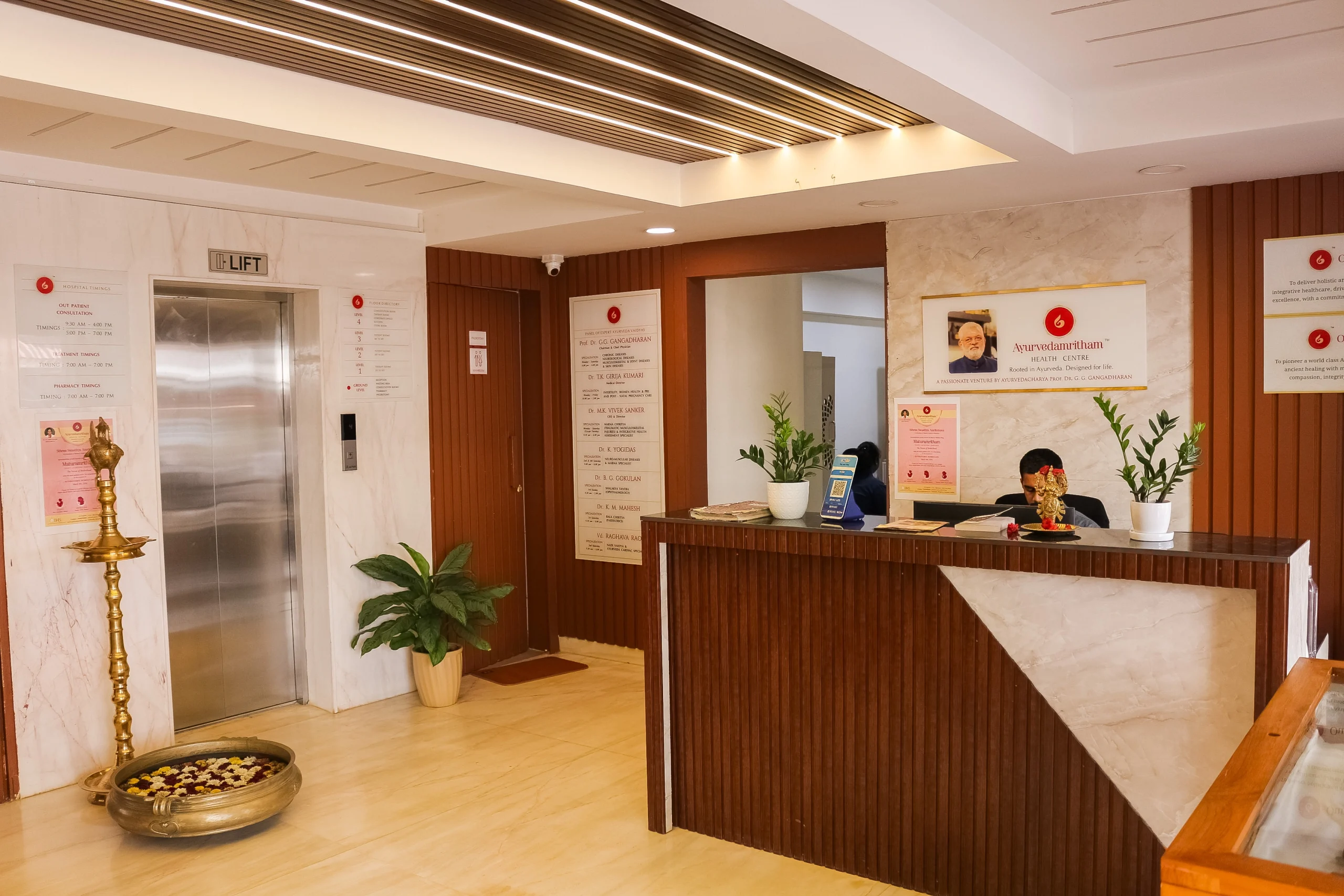
Ayurvedamritham Health Centre is led by Prof. Dr. G. G. Gangadharan, one of India’s senior Ayurveda physicians, with more than four decades in clinical practice, teaching and research. Asthma care here is preventive work done alongside your existing respiratory medication.
Ayurveda Treatment for Asthma: Frequently Asked Questions
Start with an assessment, not a prescription
Bring your inhalers and any oral medication, spirometry or allergy reports if you have them, and a rough note of how often you use the reliever in a typical week. That number tells us more than almost anything else.