
Neurological Disorders / Ardhavabhedaka
Ayurveda Treatment for Migraine
A painkiller ends an attack. It does nothing about the next one. Ayurveda works on the frequency — treating the head through the route the classical texts call its doorway.
40+ years
Led by Prof. Dr. G. G. Gangadharan
Yelahanka
North Bengaluru, Judicial Layout
Nasya-led
Direct route to Shiras
What is migraine?
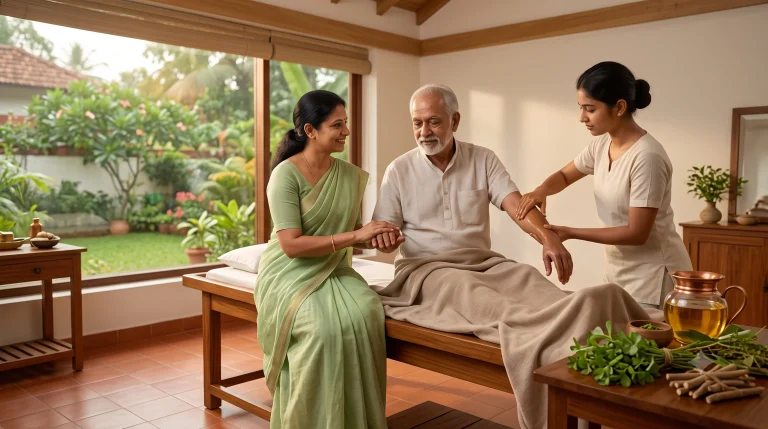
Migraine is not a bad headache. It is a neurological event — a wave of altered activity across the brain that produces throbbing pain, usually on one side, along with nausea, and an intolerance of light and sound that sends most sufferers into a dark room.
An attack can last four hours or three days. Some people get a warning: flickering lights, blind spots, tingling in one hand. Many do not, and the pain simply arrives.
What most patients want is not another painkiller. It is fewer attacks — and that is a different treatment question entirely.
Treatment for migraine in Ayurveda begins with Ardhavabhedaka
Among the Shiroroga [disorders of the head] described in the classical texts, one is named for exactly what it does: ardha [half] and avabhedaka [splitting].
Ardhavabhedaka
The half-splitting headache
Severe pain confined to one half of the head, described as tearing or piercing, arriving in bouts with pain-free intervals between. Vata-dominant, often with Kapha or Pitta accompanying it.
Suryavarta
The sun-following headache
A related presentation in which pain rises with the sun, peaks around midday and subsides as the sun sets. Patients whose attacks are reliably triggered by heat and sun exposure often match this description better.
Ayurveda regards Shiras [the head] as uttamanga — the foremost part, where the senses and consciousness are seated. And it identifies a specific route to it: nasa hi shiraso dwaram, the nose is the doorway to the head. That single line is why Nasya [medicated nasal instillation] is central to migraine treatment rather than incidental to it.
When a headache needs a hospital, not a clinic. Some headaches are not migraine. Seek immediate medical attention for a headache that arrives abruptly and is the worst of your life, one with fever and neck stiffness, one following a head injury, one with weakness, confusion, slurred speech or visual loss, or a headache pattern that has changed markedly and recently. Ayurveda treatment is for established, diagnosed migraine — not for a new or changing headache that has not been evaluated.
What sets off an attack
Migraine triggers are highly individual, but the classical Vata aggravators account for a striking proportion of them.
Our Ayurveda Treatment Protocol
Head therapies are given between attacks, not during them. The measure of success is not how one headache felt but how many you had this month compared with last.
Assessment
Day 1
Attack frequency, duration and side, aura, nausea, identified triggers, cycle relationship, neck involvement, current painkillers and preventives, and any scan already done.
Deepana & Pachana
Days 1 – 7
Digestive correction, and the first practical changes — meal timing above all. A significant number of patients see attack frequency fall from this alone, before any therapy has begun.
Snehana & Swedana
Days 5 – 12
Oleation and gentle fomentation with particular attention to the neck, shoulders and upper back, where the tension that precedes many attacks accumulates.
Nasya
Days 8 – 21
The central therapy. Medicated oil instilled into the nostrils over a scheduled course — Anu Taila or Shadbindu Taila commonly — acting directly on Shiras through the route the texts call its doorway.
Shirodhara or Virechana
Days 14 – 26
Shirodhara where stress and disturbed sleep clearly drive the pattern. Virechana [therapeutic purgation] where Pitta features dominate — burning, heat sensitivity, attacks worsening in summer or midday.
Shamana & Trigger Management
Months 2 – 6
Internal medicines with a maintained routine — fixed meals, fixed sleep, screen and sun discipline. Reviewed monthly against your headache diary, which is the only honest measure of progress.
Medicines, Therapies and Daily care
Internal formulations
Selected by whether Vata or Pitta dominates the presentation:
- Pathyadi Kashayam, long-established in headache disorders
- Drakshadi Kashayam where heat and burning accompany the pain
- Ksheerabala and Dhanwantharam for the Vata component
- Brahmi and Jatamansi for sleep and stress through the maintenance phase
Head therapies
The classical Murdha Taila group, chosen by presentation:
- Nasya — the principal therapy in migraine
- Shirodhara for stress-driven and sleep-disturbed patterns
- Shiro Pichu and Shiro Basti for severe, long-standing cases
- Takradhara where heat and burning dominate
The headache diary
We ask every migraine patient to keep one: date, duration, severity, what preceded it, what was eaten, how you slept. It identifies your specific triggers within two months and is the only reliable way to know whether treatment is working.
Routine, not diet alone
Migraine responds to regularity more than to restriction. Fixed meal times with nothing skipped, a consistent sleep and waking hour including weekends, and hydration through the day. Suspected food triggers are tested one at a time rather than eliminated wholesale.
Why Choose Ayurvedamritham
Classical practice, in North Bengaluru
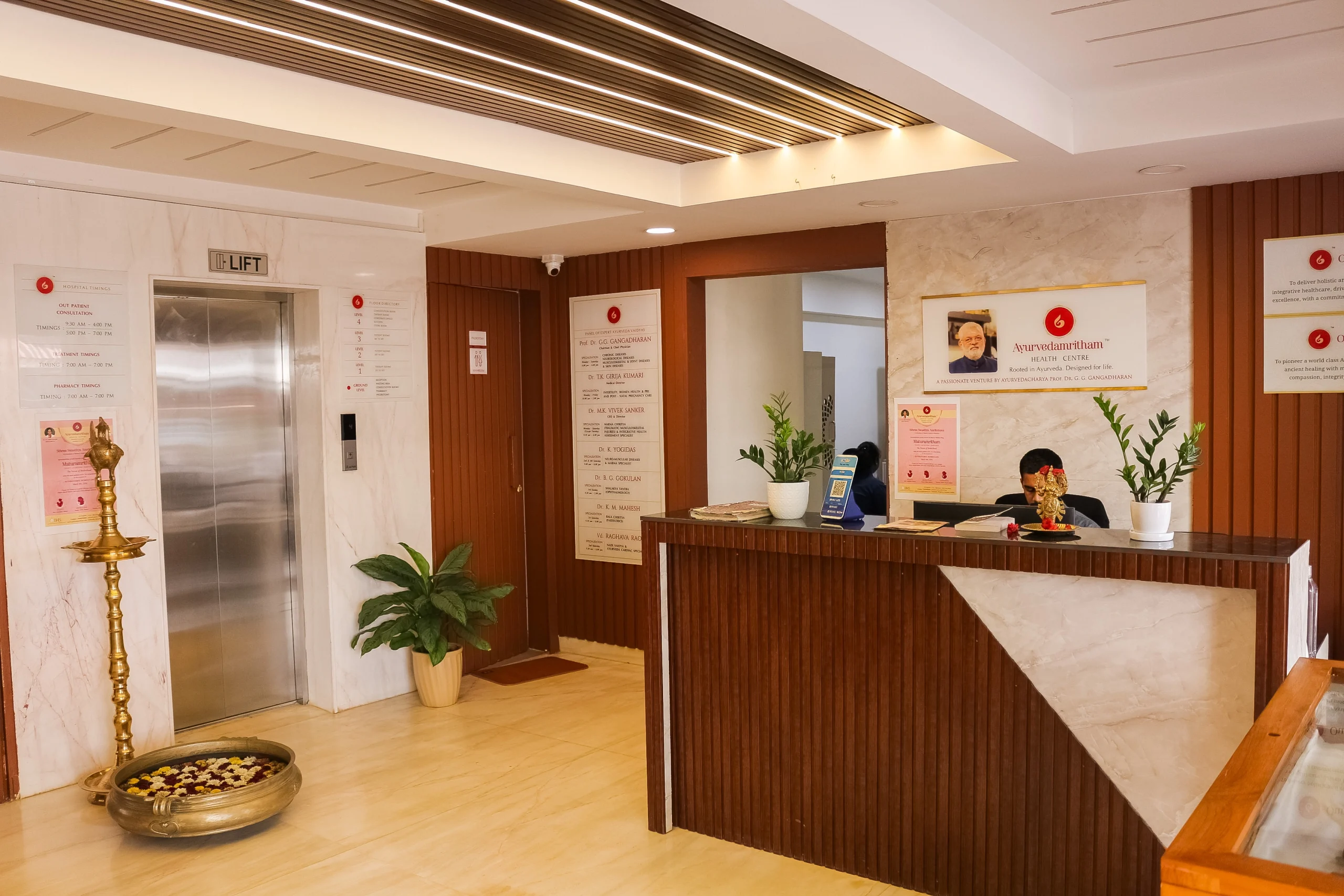
Ayurvedamritham Health Centre is led by Prof. Dr. G. G. Gangadharan, one of India’s senior Ayurveda physicians, with more than four decades in clinical practice, teaching and research. Migraine here is treated as a frequency problem, and progress is measured that way.
Ayurveda Treatment for Migraine: Frequently Asked Questions
Start with an assessment, not a prescription
Bring your current medication, any scan reports, and — if you can — a note of your last ten attacks with dates and what preceded them. That record shapes the plan more than anything else you can give us.