
Endocrine & Metabolic / Madhumeha
Ayurveda Treatment for Type 2 Diabetes
Ayurveda described diabetes, its two distinct patient types and its complications long before insulin was discovered. Treatment here works alongside your diabetologist — never instead of them.
40+ years
Led by Prof. Dr. G. G. Gangadharan
Yelahanka
North Bengaluru, Judicial Layout
Monitored
Sugars tracked throughout treatment
What is type 2 diabetes?
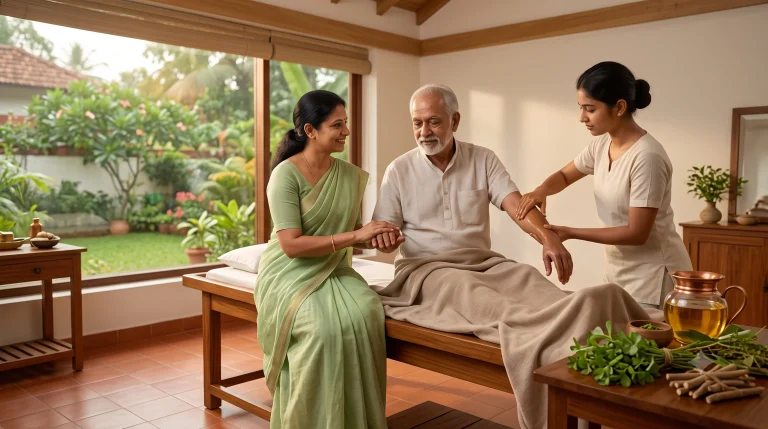
In type 2 diabetes the body still produces insulin, but the tissues have stopped responding to it properly. The pancreas compensates by producing more, and for years the blood sugar stays acceptable. Eventually it cannot keep up, and the numbers begin to climb.
This is why the disease is usually silent for a decade before diagnosis, and why the diagnosis so often arrives through a routine check rather than through symptoms. By then, insulin resistance is long established.
It also explains why treatment aimed only at lowering the number, without addressing the resistance underneath it, tends to require steadily increasing doses over time.
Treatment for diabetes in Ayurveda begins with Prameha
Ayurveda groups disorders of excessive and altered urination under Prameha, describing twenty varieties. Madhumeha — literally honey-urine — is the one that corresponds to diabetes mellitus.
The two patient types
Sthula & Krisha pramehi
The texts divide diabetics into sthula [the obese, with excess to be cleared] and krisha [the lean and depleted, needing nourishment instead]. These receive nearly opposite treatments — one of Ayurveda’s more striking clinical distinctions.
The two mechanisms
Avarana & Dhatukshaya
Avarana [obstruction] describes the obese pattern, where Kapha and meda block Vata’s normal function. Dhatukshaya [tissue depletion] describes the lean pattern, where the tissues themselves have wasted.
The classical symptoms read as a straightforward clinical description: prabhuta mutrata [excessive urination], avila mutrata [turbid, cloudy urine], pipasa [persistent thirst], daurbalya [weakness] and slow wound healing. The texts also warn that untreated Prameha progresses to pidaka — the non-healing ulcers we now call diabetic foot.
Read this before anything else. Do not stop or reduce metformin, other oral medication or insulin because you have begun Ayurveda treatment. Doing so risks dangerously high blood sugar. Equally, several Ayurveda formulations genuinely lower blood glucose, which means that taken alongside your existing medication your sugars can drop too low. That is why we monitor throughout, and why any change to your prescription is made by your diabetologist, with readings in hand — not by us, and not by you.
What produces it
Charaka’s list of causes for Prameha is remarkably close to a description of contemporary urban life.
Our Ayurveda Treatment Protocol
Which protocol you receive depends first on whether you are the obese or the lean type. The two paths diverge from the second stage onward.
Assessment
Day 1
Constitution, build, duration of diabetes, current medication and doses, HbA1c and fasting and post-meal readings, kidney and liver function, eye and foot examination, and screening for neuropathy.
Deepana & Pachana
Days 1 – 10
Digestive and metabolic correction. For both patient types this stage is the same, and it is where the diet plan is put in place — the intervention with the largest measurable effect on your numbers.
The paths divide
Days 8 – 20
Sthula (obese): Apatarpana [depleting therapy] with Udwartana and Kapha-reducing measures. Krisha (lean): Santarpana [nourishing therapy] with oleation and strengthening formulations. Giving one patient the other’s protocol is actively harmful.
Shodhana, if suitable
Days 16 – 28
Vamana or Virechana for the obese type with good reserve. Purification is deliberately avoided in lean, depleted or long-standing diabetics, in kidney impairment, and wherever sugars are unstable.
Complication care
As indicated
Where neuropathy, non-healing wounds or early kidney involvement are present, specific therapies are added — medicated oil applications and Basti for neuropathy, wound care protocols for ulcers.
Shamana & monitoring
Months 2 – 6
Long-phase internal medicines with sugars checked regularly and HbA1c repeated at three months. Medication adjustments, if the readings support them, are made by your diabetologist.
Medicines, Therapies and Daily care
Internal formulations
Selected by patient type and by which complications are present:
- Nishakathakadi Kashayam and Nisha Amalaki, long-established in Prameha
- Chandraprabha Vati, particularly where urinary symptoms dominate
- Meshashringi [Gymnema sylvestre], Guduchi and Haridra
- Shilajatu, classically regarded as a principal remedy in Prameha
Therapies
Chosen conservatively — the diabetic patient tolerates less than the healthy one:
- Udwartana for the obese type, targeting meda dhatu
- Abhyanga with warming oils where neuropathy causes numbness or burning feet
- Basti for diabetic neuropathy and Vata complications
- Shirodhara where stress is clearly destabilising the readings
Exercise
The texts name inactivity as a direct cause, and prescribe exertion as treatment. A daily walk after meals, resistance work twice weekly, and — crucially for anyone with neuropathy — a daily foot inspection, because a wound you cannot feel is the one that becomes serious.
Diet
Old grains preferred to new, barley and millets favoured over polished rice, protein and fibre raised, and the largest meal taken at midday. No grazing between meals — the gap matters as much as the content.
Why Choose Ayurvedamritham
Integrative by design, not by compromise
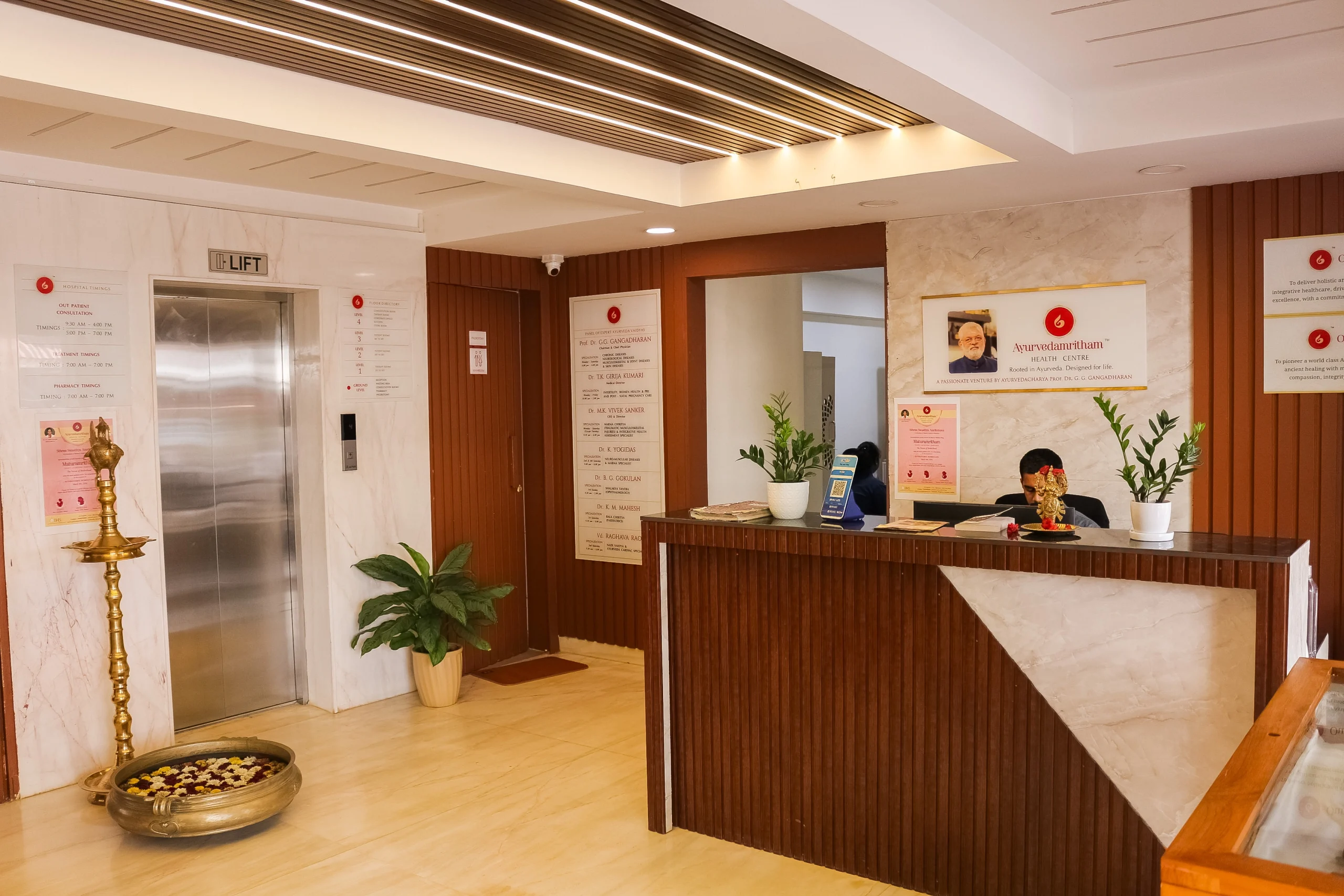
Ayurvedamritham Health Centre is led by Prof. Dr. G. G. Gangadharan, one of India’s senior Ayurveda physicians, with more than four decades in clinical practice, teaching and research. Diabetes care here is built around your existing medical management, with monitoring as a core part of the protocol rather than an afterthought.
Ayurveda Treatment for Diabetes: Frequently Asked Questions
Start with an assessment, not a prescription
Bring your complete prescription list, your most recent HbA1c, kidney and liver function reports, and your home glucose readings if you keep them. If you have had an eye or foot check recently, bring that too.